Visiting Card Printing in Mulund: Paper, GSM & Pricing Guide (2026)
Everything Mumbai professionals need to print a visiting card that gets remembered — paper types, GSM, finishes, sizes, design files, and 2026 prices from Mulund printers.
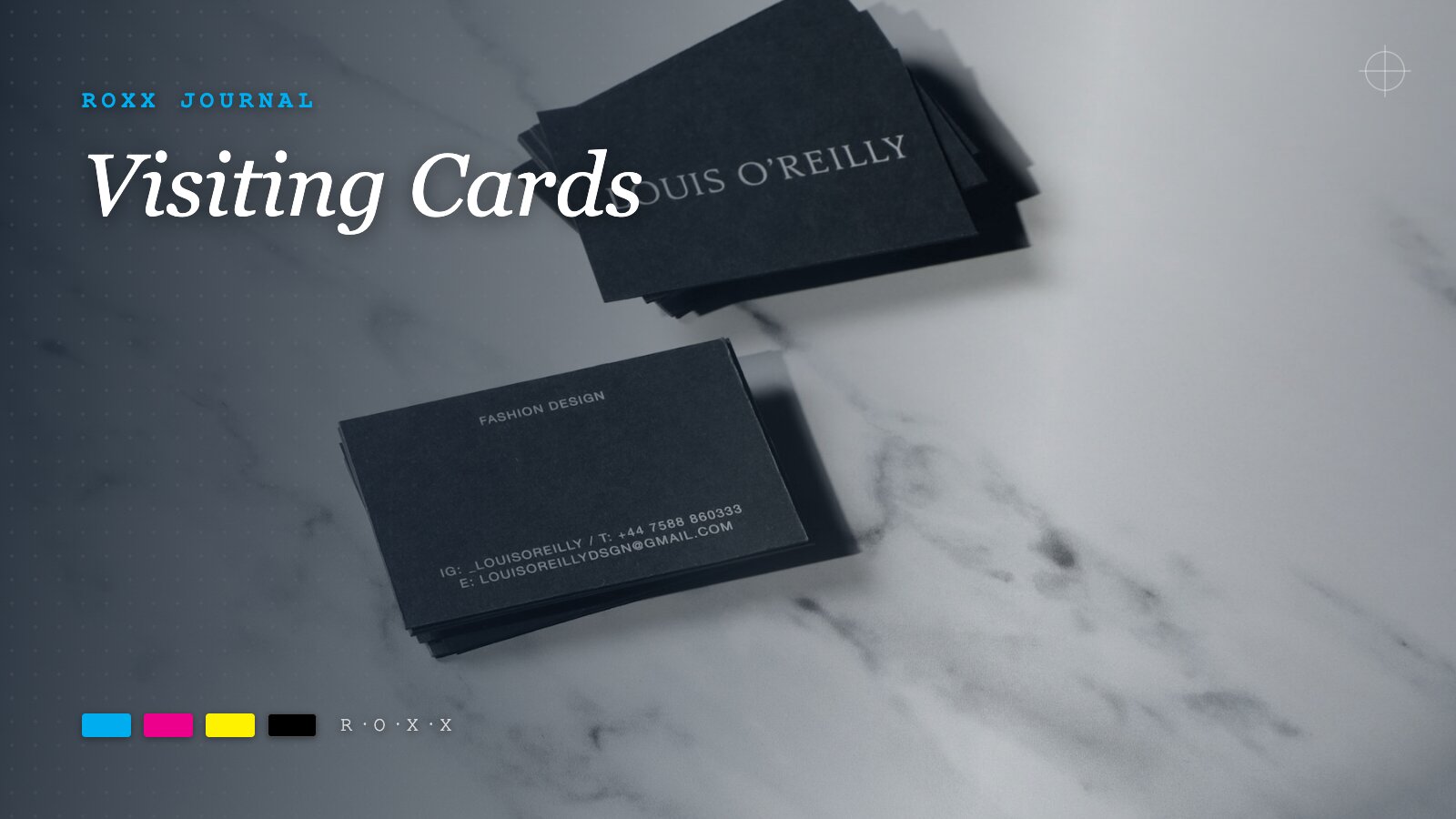
A visiting card is the most-handed-out piece of marketing your business will ever own. People look at it for three seconds, decide if you’re worth their time, and either save it or throw it. The paper, the finish, even the corner radius — they all signal something before the customer reads a single word.
This guide covers what we’ve learned printing 100,000+ visiting cards for Mumbai professionals — from kirana shop owners to senior consultants. Pick the right paper, finish, and finishing details, and your card lands on the desk instead of in the bin.
Why visiting cards still matter in 2026
Despite LinkedIn, despite digital business cards, despite “scan my QR code” — Mumbai networking still runs on paper. Sales meetings, doctor’s chambers, real estate site visits, family weddings, society inaugurations — the card gets pulled out of a wallet and exchanged. A digital QR can do the same job, but it doesn’t sit on someone’s desk for two weeks reminding them to call you.
What’s changed is the standard. The cheap matte cards from 10 years ago look obviously cheap today. To be remembered, your card needs to feel premium — heavier paper, sharper print, better finish.
Paper types we print on, explained simply
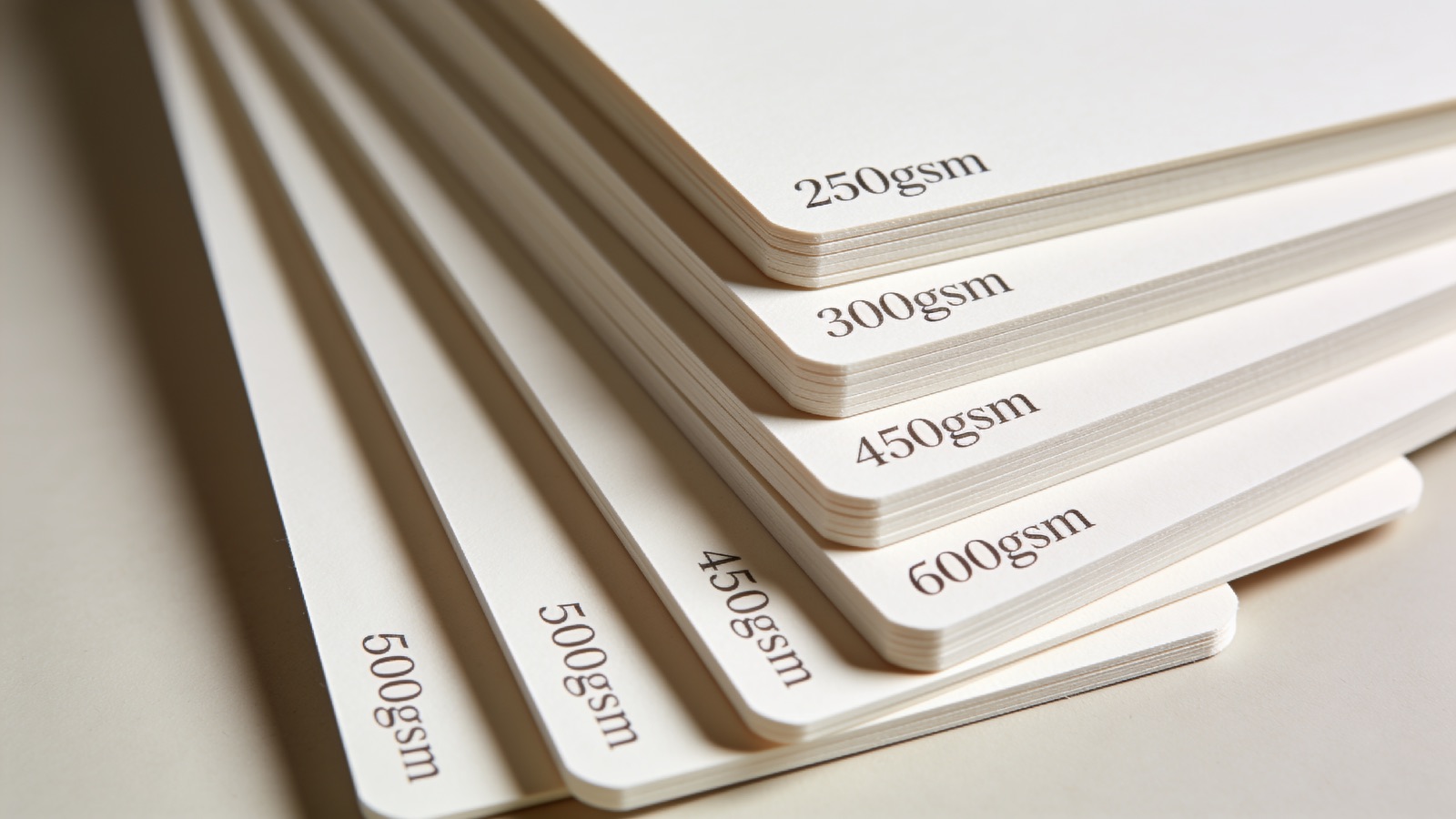
The single biggest decision is GSM (grams per square metre — the weight/thickness of the paper) and finish (matte, gloss, or premium textured).
300 GSM art card — the everyday standard
Standard business card stock. Slightly thicker than a credit card. Good for staff cards, daily-use sales reps, anyone who hands out 50+ cards a week. Cost-effective. Use when budget is tight and turnover is high.
350 GSM art card — the professional sweet spot
The most popular choice in Mumbai for senior staff and founders. Noticeably heftier in hand than 300 GSM. Holds matte or spot UV beautifully. Use when you want a card that feels intentional without going premium-price.
400 GSM matte / textured cotton — the premium tier
Heavy, almost rigid. Often paired with cotton-feel or linen-touch lamination so the card has a tactile quality. Doctors, lawyers, CAs, architects, designers — anyone whose card represents personal expertise. Use when you want the recipient to remember the card itself.
Coloured / metallic / black cards — the statement tier
Black-core paper (where the card edge shows a black stripe), Pantone-coloured stock, gold or silver metallic substrate, or transparent acrylic-feel PVC. Limited print colours work on these (white ink, foil, embossing). Use when the card itself is the brand statement — fashion designers, photographers, creative agencies.
PVC cards — the heavy artillery
Made of plastic, like a credit card. Lasts forever, water-resistant, premium feel. ~3–5× the price of paper cards. Use when the card needs to last in a wallet for years (medical professionals, architects who hand cards to project teams), or when you want maximum visual impact.
Matte vs glossy vs spot UV — the finish decision
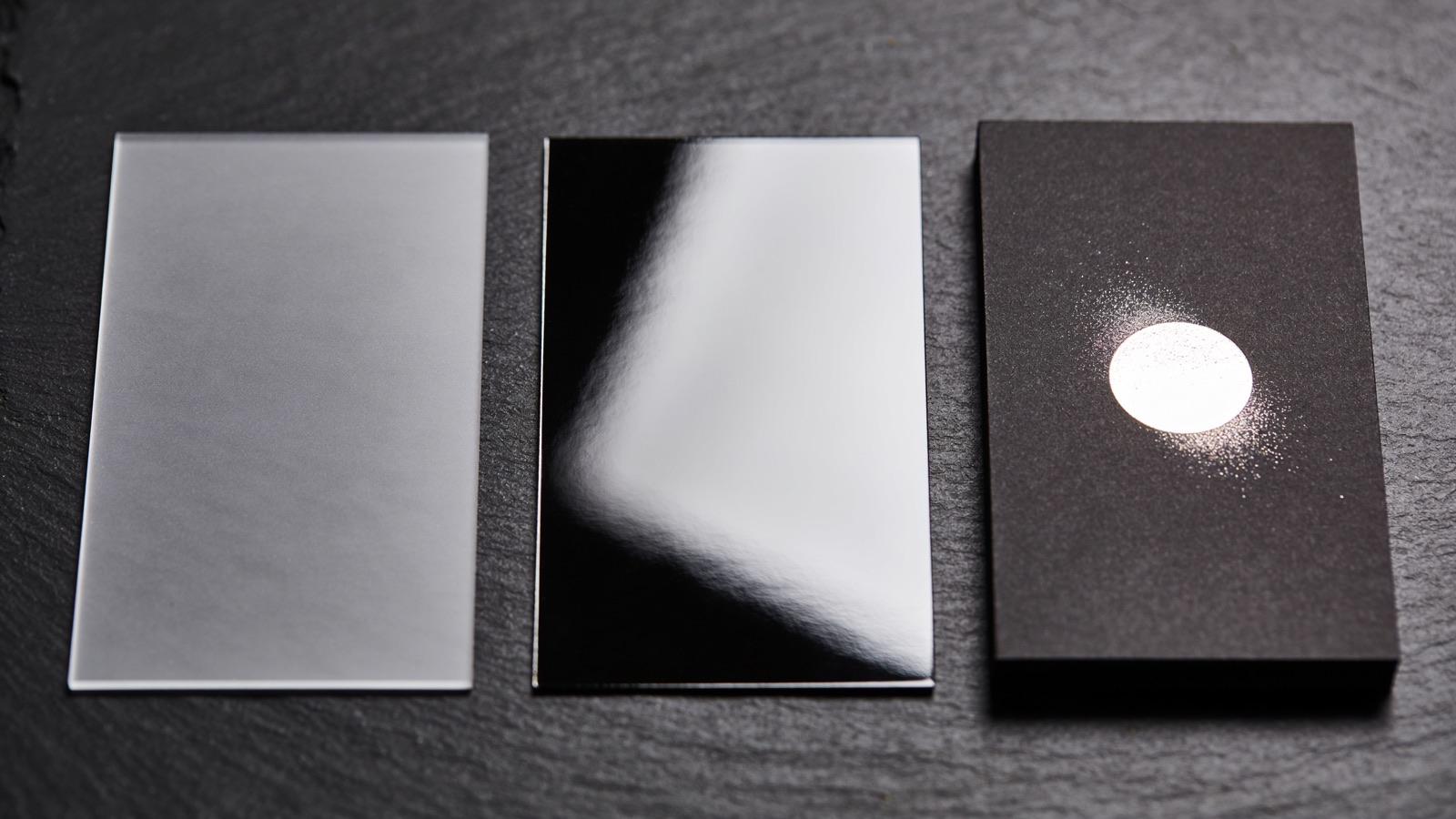
This is where most cards either look premium or generic.
Matte lamination
Most popular finish for professional services in 2026. Soft to touch. Doesn’t show fingerprints. Looks understated and confident. Pairs well with serif typography and minimal designs. Default choice for: doctors, consultants, lawyers, B2B executives.
Gloss lamination
Brighter, sharper colour reproduction. Slightly cheaper than matte. Reflects light, which makes photos pop. Shows fingerprints. Default choice for: real estate (where photos of buildings benefit from gloss), photographers, beauty/cosmetics, food businesses.
Spot UV
A clear glossy varnish applied selectively — usually over the logo or name on a matte base. Creates a tactile contrast: matte body, raised glossy logo. The most-used premium finish in Mumbai. Adds ~30% to price. Default choice for: anyone who wants their card to feel premium without going to foil.
Foil stamping
Real metallic foil pressed into the card with heat. Gold, silver, copper, rose gold, black, white — all available. Looks like luxury packaging. Adds ₹6–12 per card. Default choice for: fashion designers, jewellery brands, premium hospitality, wedding planners, anyone whose brand needs to feel expensive.
Embossing / debossing
The card is pressed so the logo or name is raised (embossing) or recessed (debossing). No ink, just texture. Subtle and tactile. Pairs beautifully with cotton-textured paper. Default choice for: law firms, architects, CAs, anyone who wants a “you can feel the quality” effect.
Edge painting / edge gilding
The cut edge of the card is painted gold, black, or a brand colour — visible in profile. Used on 600+ GSM cards. Top-tier finish. Adds ₹15–25 per card. Default choice for: premium D2C founders, fashion brands, luxury hospitality.
Sizes — pick by use case, not by tradition
The Indian standard is 90 × 54 mm. The US standard is 89 × 51 mm (slightly different aspect ratio). Most local Mumbai cards we print are Indian standard, but the US standard fits better in foreign business-card holders.
Other shapes that work:
- Square (54 × 54 mm) — modern, designer-friendly, fits in most wallets
- Mini (85 × 27 mm) — half-height, used by photographers and creative agencies
- Folded (open: 180 × 54 mm, folded: 90 × 54 mm) — gives you 4 print surfaces, used as appointment cards or product introduction cards
- Round-cornered standard — softer, more modern; rounded corners are now an option on any size for ₹2–4 extra per card
Mumbai pricing benchmark (April 2026)
Real prices from the Mulund / Bhandup market for single-side printing. Double-sided adds ~30%.
| Paper + finish | 100 cards | 250 cards | 500 cards | 1,000 cards |
|---|---|---|---|---|
| 300 GSM matte (basic) | ₹250–350 | ₹400–550 | ₹600–800 | ₹950–1,300 |
| 350 GSM matte lamination | ₹400–550 | ₹600–800 | ₹900–1,200 | ₹1,500–1,900 |
| 350 GSM matte + spot UV | ₹600–800 | ₹900–1,200 | ₹1,400–1,800 | ₹2,300–2,900 |
| 400 GSM textured cotton | ₹800–1,100 | ₹1,300–1,700 | ₹2,000–2,600 | ₹3,200–4,000 |
| 350 GSM matte + gold foil logo | ₹1,100–1,500 | ₹1,800–2,400 | ₹2,800–3,600 | ₹4,500–5,800 |
| 600 GSM with edge gilding | ₹2,200–2,800 | ₹3,400–4,200 | ₹5,200–6,400 | ₹8,000–9,800 |
Cost drivers:
- Quantity matters — 250 vs 100 cards is rarely 2.5× the price (setup cost amortises across quantity)
- Below 250 cards: digital printing (faster, slightly less colour-accurate)
- Above 500 cards: offset printing (sharper colour, better unit cost)
- Custom shape or die-cut adds a one-time die-making fee of ₹200–500
Design files: what to send your printer
Whether you’re handing your printer an in-house file or one made in Canva, send these specs to avoid delays:
Format
PDF or AI is best. PNG/JPG works for simple designs but loses sharpness on text. Word documents and PowerPoint files will look fine on screen but pixelate when printed.
Resolution
300 DPI at the final print size. If your file is 72 DPI (web resolution), the print will look fuzzy. Most templates from Canva, Figma, and Photoshop default to 72 DPI — switch to 300 before exporting.
Colour mode
CMYK (Cyan, Magenta, Yellow, Key/Black) — the inks used in offset and digital printing. Files designed in RGB (screen colour) will shift when printed: bright greens turn duller, neon orange becomes muted. Always convert to CMYK in your design tool before export.
Bleed
A 3 mm bleed on every edge. Bleed = the area beyond the final cut line that prevents thin white edges if the cutter is slightly off. Final card 90 × 54 mm → design canvas should be 96 × 60 mm with the trim line marked at 90 × 54.
Safe area
Keep critical text 5 mm inside the trim line. Phone numbers, email addresses, and logos that touch the edge often get cut off if the trim is slightly misaligned.
Fonts
Embed fonts in PDF or convert text to outlines. Otherwise the printer’s PDF reader may substitute a different font and your beautiful card looks generic.
If you don’t have a designer’s file, send us your logo + business details and we’ll lay out a free basic design for you (included in the print order).
How long does printing take in Mulund
Standard turnaround for visiting cards in Mulund:
- Digital (under 250 cards): 24–48 hours from final approval
- Offset (250+ cards): 3–5 working days from final approval
- Premium finishes (foil, emboss, spot UV): add 1–2 days
- Custom die-cut shape: add 2–3 days for die-making
Same-day printing is possible for emergencies on standard 300 GSM matte cards (rush charge applies).
Common mistakes to avoid
Mistake 1: Going cheap on paper. A ₹0.50 card and a ₹2 card look identical on screen but feel completely different in someone’s hand. The price gap on 250 cards is ~₹400 — not worth the cheaper feel.
Mistake 2: Overcrowding the design. Phone, mobile, landline, email, website, GSTIN, social handles, address, slogan — all on one side, all 9pt — and nothing stands out. Pick the 4 things that matter most, make them readable, leave whitespace.
Mistake 3: Wrong colour profile. Designs that look vibrant on screen but print flat. Convert RGB → CMYK and check the soft-proof in your design tool before sending.
Mistake 4: Forgetting the bleed. White edges on cards because the design ended at the trim line. Always extend background colours and images 3 mm past the edge.
Mistake 5: Tiny text. Anything under 7pt won’t print cleanly on cardstock. Keep fonts 8pt+ for body text, 6pt minimum for legal/disclaimer text only.
Mistake 6: Using free Canva templates without checking copyright. Some Canva templates restrict commercial print use. Verify the license before you print 1,000 copies.
FAQ
Can I get just 100 visiting cards or do I need to order 500? We print from 100 cards. Below 100 the unit cost gets uneconomical. 250–500 is the sweet spot.
Will spot UV survive a wallet? Yes — it’s a hardened resin coating. Won’t peel, scratch, or wear off in normal wallet use. Foil is slightly more delicate but still holds up 3–5 years.
Can I print a QR code on the card? Absolutely — we print QR codes for digital business cards, vCard downloads, WhatsApp deeplinks, payment links, Google Reviews, and websites. Make sure the QR is at least 1 cm square at print size for reliable scanning.
Are double-sided cards worth it? Almost always yes — you get 2× the design space for ~30% extra cost. Use the back for: services list, 5-star Google review QR code, social media handles, or a memorable visual element. Empty back = wasted real estate.
Do you keep a digital file of my design for reorders? Yes — once we print your card, we keep the file indefinitely. Reorders just need a WhatsApp message with quantity. No re-design fee.
What’s the difference between Vistaprint and a local Mulund printer? Vistaprint and similar online services are economical for very large quantities (1,000+) shipped in 7–10 days. Local Mulund printers like us are faster (24–48 hour digital, 3–5 day offset), let you walk in to approve a physical proof, and offer custom finishes (real foil, edge gilding, embossing) that online services can’t match.
Order your visiting cards
Send your logo and details to us on WhatsApp and we’ll send a digital proof + quote within 2 hours.
For the full Business Printing range (visiting cards + letterheads + envelopes + bill books + rubber stamps), see our Business Printing services page.
Looking for premium gifting alongside cards? See Stationery & Corporate for certificates, file folders, and custom merchandise.
Last updated: April 2026. Pricing reflects current Mulund/Bhandup market rates and may vary by paper supplier and design complexity.