Digital vs Offset Printing in Mumbai: Which Is Cheaper for Your Small Business?
When digital printing wins, when offset wins, and the simple 500-piece rule for Mumbai SMBs. Real cost comparisons, quality differences, and how Mulund printers actually decide.
Every Mumbai shop owner who’s ever asked a printer “what’s it cost for 1,000 brochures?” has heard the same first question back: “Digital or offset?”
For most non-print people, the answer is “I don’t care, just give me the cheaper one”. The honest answer: it depends on your quantity, your turnaround, and how much you care about colour accuracy. This guide explains the difference in plain language, the simple cutoff that decides which one is cheaper, and what we actually use for our Mulund clients.
The simple rule that solves 80% of the decision
Under 500 pieces → digital is cheaper. Over 1,000 pieces → offset is cheaper. 500–1,000 pieces → it’s a wash; pick by speed and quality needs.
That’s it. Most of the rest of this guide is the why and the edge cases.
Digital printing — when it wins
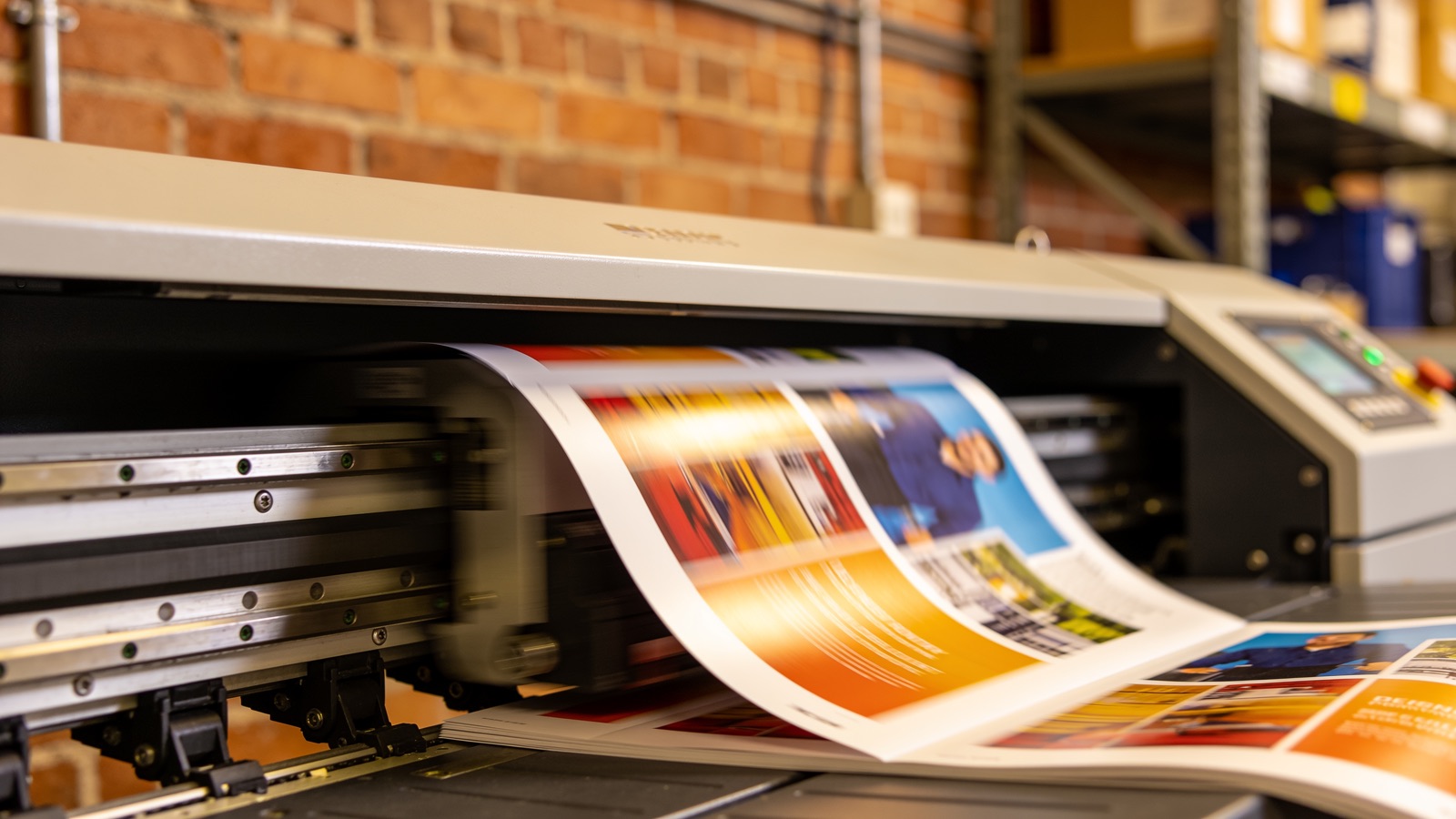
Digital printing sends your file straight from a computer to a high-end laser or inkjet printer. No setup, no plates, no preparation. The first print costs the same as the 100th print.
- Setup cost: zero
- Per-piece cost: higher than offset
- Speed: fast — same-day for small jobs
- Min quantity: 1 (yes, you can print one card)
- Max practical quantity: 500–1,000 pieces (above this, offset is cheaper)
Digital wins for:
- Visiting cards (50–250 pieces is the typical run)
- Personalised invitations (each one has a different name)
- Short-run flyers (50–500 for an event)
- Variable data (numbered tickets, unique coupon codes)
- Quick-turnaround proofs before a larger offset run
- Photo books / small-batch catalogues
- Same-day rush jobs
Offset printing — when it wins
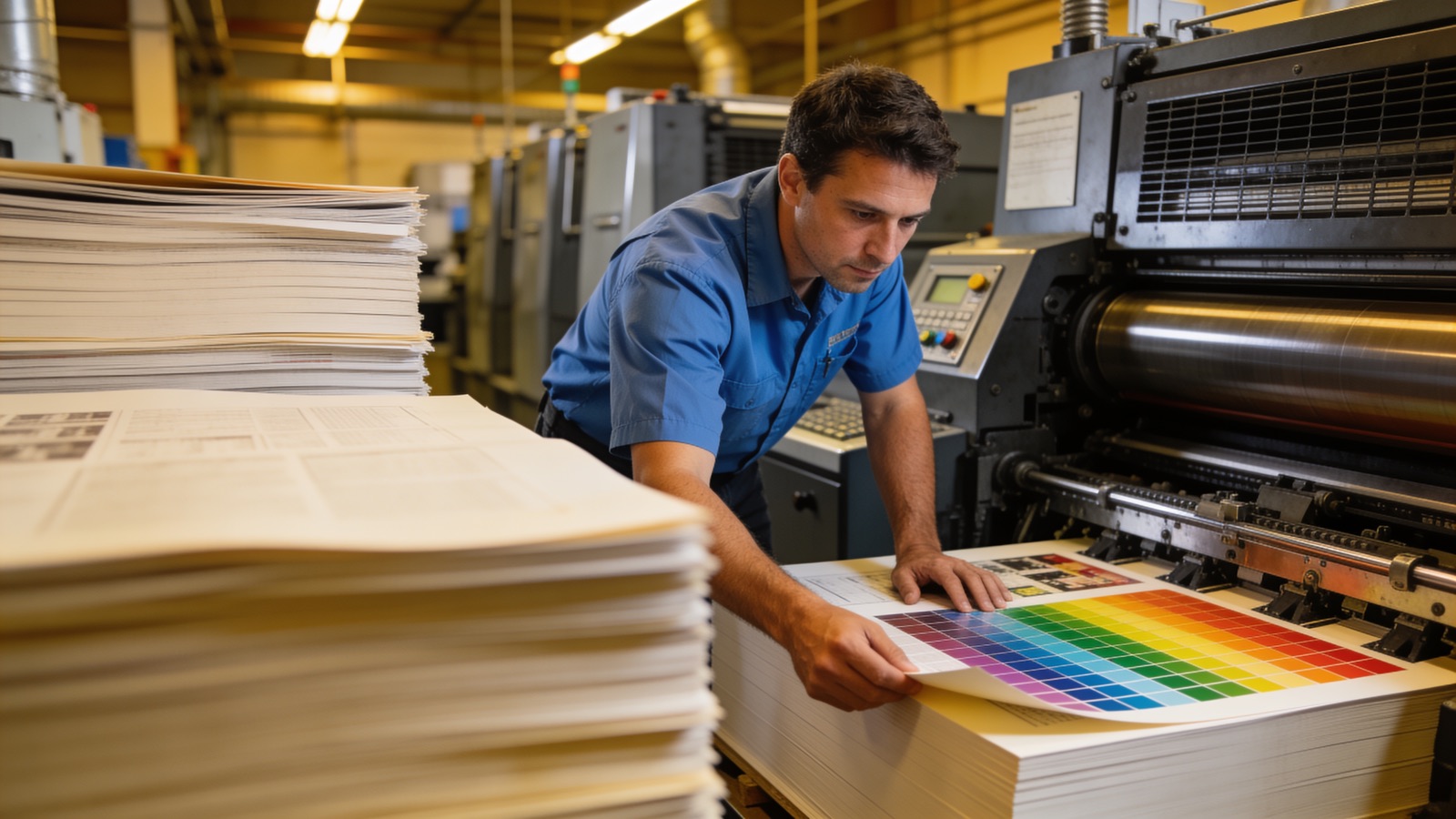
Offset printing uses metal plates. Your design is “burned” onto the plates (one plate per ink colour), and the plates are loaded into a large press that runs sheets through at high speed.
- Setup cost: ₹1,500–4,000 (plate-making + colour calibration)
- Per-piece cost: much lower than digital once setup is amortised
- Speed: slower start (1–2 days for setup), then faster than digital for large runs
- Min quantity: practically 500 — anything below this is paying for setup with too few pieces
- Max practical quantity: essentially unlimited
Offset wins for:
- Brochures and flyers above 500 pieces
- Certificate runs above 250 pieces
- Books and catalogues (60+ pages, 500+ copies)
- Stationery sets (letterheads, envelopes, bill books in volume)
- Annual reports, AGM materials
- Large-volume promotional pamphlets
Side-by-side cost comparison (real Mumbai numbers)
Here’s what we actually charge a Mumbai SMB for an A4 single-sided full-colour brochure on 130 GSM art paper, in April 2026:
| Quantity | Digital cost | Offset cost | Cheaper |
|---|---|---|---|
| 100 brochures | ₹600 | ₹2,500* | Digital |
| 250 brochures | ₹1,200 | ₹2,800* | Digital |
| 500 brochures | ₹2,000 | ₹3,200 | Digital (just barely) |
| 1,000 brochures | ₹3,500 | ₹4,000 | Offset (cleaner result) |
| 2,500 brochures | ₹7,500 | ₹6,500 | Offset |
| 5,000 brochures | ₹14,000 | ₹10,500 | Offset |
| 10,000 brochures | ₹26,000 | ₹17,500 | Offset |
*The fixed setup cost (~₹2,500) makes offset uneconomical below 500 pieces.
The “crossover point” where offset becomes cheaper is around 800–1,200 pieces depending on paper choice and finish. At 1,500+, offset has a clear cost advantage.
Quality difference — can you actually see it?
Honest answer: for most everyday print jobs, no, you can’t tell the difference. Both digital and offset produce sharp text, accurate photos, and clean colour. A flyer printed digitally vs offset, side by side, looks identical to 95% of viewers.
The differences emerge in specialist scenarios:
Where offset is visibly better:
- Solid Pantone colour matching — offset uses Pantone inks directly; digital approximates in CMYK and may shift slightly
- Pure blacks and rich shadows — offset blacks are deeper because they layer 4 ink colours (4-colour rich black); digital blacks are slightly lighter
- Very large solid colour fills — digital can show subtle “banding” (faint lines) in large solid areas; offset stays smooth
- Skin tones and gradients — offset is slightly smoother for premium photography reproduction
Where digital is visibly better:
- Variable data — each piece can have unique text, name, photo (impossible with offset)
- Single proofs — print 1 sample to check colour before committing to a 1,000-piece run
- Sharp small text — digital can be sharper at very small font sizes (under 6pt)
- Foil emulation — digital + UV gloss can simulate foil at a fraction of the cost (though real foil still wins)
Where they’re identical:
- Brochures, flyers, posters at standard quality
- Visiting cards — most 250-card runs are indistinguishable
- Internal documents, reports
- Anything where you’re not chasing premium colour accuracy
Speed difference
| Job type | Digital turnaround | Offset turnaround |
|---|---|---|
| 100 visiting cards | Same day to 24 hours | 3–5 days |
| 500 brochures | 24–48 hours | 3–5 days |
| 2,000 brochures | Not economical | 4–6 days |
| 250 certificates (foil) | 2–3 days | 3–5 days |
| 1,000 letterheads | 24–48 hours | 4–6 days |
| 64-page catalogue (500 copies) | Not economical | 7–12 days |
If you need it in 24 hours, the answer is digital regardless of cost.
How we decide for Mulund clients
When a client comes in, we run a 4-question decision tree:
1. How many pieces do you need?
- Under 500: digital (always)
- Over 1,500: offset (always)
- Between: continue to next question
2. What’s the deadline?
- Need it in 48 hours: digital
- Have 4+ days: continue
3. Is there variable data (different name/code per piece)?
- Yes: digital (offset can’t do variable data)
- No: continue
4. Is colour accuracy critical (Pantone match, premium brand)?
- Yes: offset
- No: digital (cheaper for the borderline quantity)
For ~80% of orders, the answer is obvious within question 1. The 20% in the 500–1,500 range gets sorted by deadline and quality.
Common myths
Myth: “Offset is always more premium.” False. The premium feel comes from paper, finish, and design, not from offset vs digital. A 250-piece visiting card on 350 GSM matte with spot UV looks identical whether printed digitally or offset. The press matters less than people think.
Myth: “Digital fades faster than offset.” False. Both modern digital and offset prints are colorfast for 5+ years indoor. Outdoor fading is a UV/monsoon issue, not a printing-method issue.
Myth: “You can’t print on heavy paper digitally.” Mostly false. Modern digital presses handle up to 400 GSM card. Heavier than that (rigid box card, leather-feel premium stocks) does need offset or specialist equipment.
Myth: “Offset = bigger company, digital = local printer.” False. Both are widely available across Mumbai. Most local Mulund printers (us included) have both digital and offset capacity in-house, or partner with offset presses for high-volume jobs.
Myth: “Digital colours always shift.” True for poorly-calibrated cheap digital printers, false for properly-calibrated commercial presses. We colour-calibrate our digital press monthly to keep CMYK output within 5% of the intended colour values. The shift is visible only on side-by-side Pantone-spot-colour comparisons, not on real-world brochures.
When you should insist on a specific method
Insist on offset when:
- You’re printing 2,000+ pieces and unit cost matters
- You’re matching a corporate Pantone exactly (e.g. TATA blue, Reliance red)
- You’re producing a 60+ page book or catalogue
- You need very specific paper stock that digital presses can’t handle (uncoated cotton, recycled handmade)
Insist on digital when:
- You need variable data (unique names, numbers, codes per piece)
- Your quantity is under 500
- You need it in 48 hours
- You want to test 1 sample before committing to a larger run
- You’re printing one-offs (a specific gift, a memorial piece, a single-event card)
Don’t worry about it when:
- You’re printing 250–500 of a standard item — either method works fine
- You’re printing for internal use (office documents, internal reports)
- Your designer hasn’t specified — just ask the printer to “pick the cheaper option”
FAQ
Can a printer mix digital and offset on the same job? Yes — a common pattern is to offset-print the wedding card body (high volume, premium colour) and digital-print the personalised envelope addresses (variable data). We coordinate this so the final pieces look uniform.
Why does offset have a “minimum order” and digital doesn’t? Because offset requires plates and setup that cost ~₹2,500 regardless of whether you print 50 or 5,000 pieces. Below 500, the setup cost makes offset more expensive than digital. Digital has zero setup, so the first piece costs the same as the hundredth.
Is one method more environmentally friendly? Slightly debated, but: digital uses less ink and produces less waste for short runs (no plates, no paper waste during press setup). Offset is more efficient at large scale — the per-piece carbon footprint drops as quantity rises. For 500 pieces, digital is greener; for 5,000, offset wins.
Do printers charge differently for digital vs offset jobs? Yes — offset has a separate setup fee (₹1,500–4,000 depending on size and number of colours). Digital has a flat per-piece price with no setup. Always ask both quotes when you’re in the 500–1,500 piece range.
My designer specified “offset only” — can I push back? Ask why. If it’s for Pantone colour matching, packaging, or a 1,000+ piece run, they’re right. If it’s for a 200-piece flyer “because offset is more premium”, they’re not. A good local printer will explain which method genuinely benefits your specific job.
Can I use the same design file for both digital and offset? Yes — both methods use the same CMYK PDF. The only difference is the printer prepares plates (offset) or sends straight to press (digital). Send your design as a CMYK PDF with bleed and the printer handles the rest.
Quick recommendation
If you’re not sure, send us your job details on WhatsApp — we’ll quote both digital and offset where it makes sense and recommend the cheaper option for your specific quantity and quality needs.
For specific service guides, see:
- Business Printing — visiting cards, letterheads, envelopes, bill books
- Marketing Materials — brochures, flyers, posters, catalogues
- Stationery & Corporate — certificates, file folders, menu cards
- Custom Merchandise — t-shirts, mugs, lanyards
Last updated: April 2026. Pricing reflects current Mulund/Bhandup market rates and varies by paper, finish, and complexity.